Eating pure jaggery in pregnancy is safe and beneficial when consumed in moderate quantities (about 10 to 15 grams per day) as part of a balanced diet. It provides plant-based non-heme iron, potassium, and digestive comfort without refined sugar additives, provided you have no history of gestational diabetes.
Key Takeaways
- Safe daily serving: 1 to 2 small cubes (10–15g) per day provides natural sweetness without causing sudden glucose spikes.
- Busting the miscarriage myth: Normal culinary portions of pure gur do not trigger uterine contractions; traditional warnings stem from high-dose heating spice mixtures.
- Dietary complement, not medicine: Jaggery contains non-heme plant iron, but it cannot replace doctor-prescribed prenatal iron and folic acid supplements.
- Chemical-free is non-negotiable: Bleached yellow market gur often contains sodium hydrosulphite residues; choosing naturally dark, unbleached jaggery avoids synthetic chemical clarifiers.
- Medical checkpoint: If you have gestational diabetes, high fasting glucose, or excessive gestational weight gain, consult your doctor before consuming any concentrated sweetener.
Is It Safe to Eat Jaggery (Gur) During Pregnancy?
Yes, pure jaggery is safe to eat during pregnancy if eaten in moderation and if your blood glucose levels are normal.
In most Indian families, pregnancy brings a flood of conflicting elder advice. One relative might suggest a cube of gur after lunch to fight weakness, while another warns that gur is inherently “hot” (garam taseer) and could harm the baby.
The reality comes down to food quality and portion control. Traditional, chemical-free jaggery is simply concentrated raw sugarcane juice boiled down until thick. It contains no synthetic additives, bone-char refining agents, or empty industrial calories, making it a far cleaner way to satisfy everyday sweet cravings than white refined sugar.
| Nutrition Marker | Pure Natural Jaggery (10–15g) | Refined White Sugar (10–15g) |
|---|---|---|
| Processing Method | Traditional open-pan boiled | Chemically bleached sucrose |
| Plant Iron | Contains trace non-heme iron | Zero |
| Potassium | Present (supports fluid balance) | Absent |
| Magnesium | Present (muscle comfort) | Absent |
| Chemical Additives | Zero in authentic desi gur | Sulfur dioxide traces |
What Are the Key Benefits of Eating Jaggery in Pregnancy?
Natural jaggery offers trace minerals that support your body through the physical shifts of pregnancy.
1. May Help Manage Daily Pregnancy Fatigue
During pregnancy, your body’s total blood volume expands significantly to nourish the placenta and growing baby. Jaggery contains natural non-heme iron. While it does not substitute for your prescribed prenatal iron tablets, enjoying a small piece alongside vitamin C-rich foods (such as a squeeze of lemon or amla) helps support dietary iron absorption naturally.
2. Offers Gentle Digestive Relief from Constipation
Elevated progesterone levels relax the smooth muscle tissues in your intestinal tract, which frequently leads to sluggish digestion, bloating, and constipation. A tiny bite of gur eaten right after a meal is an age-old Indian habit that helps stimulate digestive secretions naturally without relying on over-the-counter laxatives.
3. Supports Healthy Fluid Balance and Eases Cramps
Leg cramps and ankle puffiness (edema) are common during the second and third trimesters. Jaggery naturally contains potassium and magnesium, two essential minerals that work together to balance cellular water levels and soothe muscle tension.
4. Calms Mild Nausea and Sweet Cravings
During the first trimester, hormonal fluctuations can leave a bitter or metallic taste in your mouth. Letting a 5g cube of pure dark jaggery slowly melt on your tongue offers a clean, steady glucose lift that can soothe nausea between small meals.
How Much Jaggery Can You Safely Eat by Trimester?
Like any concentrated source of carbohydrates, moderation is everything.
| Trimester | Safe Daily Intake | Recommended Kitchen Use |
|---|---|---|
| First Trimester | 5g to 10g (1 cube) | Plain post-meal bite with saunf |
| Second Trimester | 10g to 15g (1–2 cubes) | Stirred into warm milk, oats, or dal |
| Third Trimester | 10g to 15g (1–2 cubes) | Added to homemade dry fruit laddoos |
First Trimester (Weeks 1 to 12)
Your body is adjusting to rapid hormonal surges. Stick to 5g to 10g daily. Keep it simple: eat a small piece as a post-meal palate cleanser. Avoid taking concentrated herbal decoctions (kadhas) that boil heavy quantities of jaggery with strong heating spices like raw papaya seeds, high-dose ajwain, or methi.
Second Trimester (Weeks 13 to 27)
Your energy needs rise as baby development accelerates. You can comfortably enjoy 10g to 15g daily. Use pure jaggery powder to naturally sweeten homemade ragi porridge, suji kheer, or whole wheat halwa instead of white table sugar.
Third Trimester (Weeks 28 to 40)
The baby gains weight rapidly, and physical fatigue is common. A piece of jaggery paired with a handful of roasted nuts or roasted chana provides steady, accessible energy. Traditional pinni or dry fruit laddoos bound with pure desi ghee and jaggery are often introduced in the final weeks to support maternal strength and prepare for postpartum recovery.
The Miscarriage Myth: Why Does Jaggery Have a “Hot” Reputation?
The belief that eating jaggery causes miscarriages is a widespread misconception not supported by medical science.
In traditional Ayurvedic terms, jaggery is considered ushna (mildly warming) because it stimulates digestive fire (agni). In rural folk traditions, very large, concentrated amounts of aged jaggery were occasionally combined with potent emmenagogues—herbs known to stimulate menstrual flow, like wild sesame seeds or raw papaya extracts.
A standard culinary portion of 5g to 15g of pure jaggery consumed with regular home-cooked food does not induce uterine contractions or endanger a healthy pregnancy.
Why Chemical-Free Jaggery Matters Even More During Pregnancy
The biggest risk from market jaggery is not the cane juice itself—it is the industrial chemicals added to make it look bright and golden.
Commercial wholesale mandi jaggery is frequently bleached with sodium hydrosulphite (commonly sold as “hydros” or “safeda”). This industrial chemical removes the natural dark pigments caused by boiling, producing bright yellow lumps that look clean to shoppers. However, it leaves behind sulfur residues that can irritate the respiratory and digestive tract.
Furthermore, some commercial blocks are cut with chalk powder (calcium carbonate) to make them stone-hard and heavier. During pregnancy, consuming synthetic clarifiers and chemical bleaches is an unnecessary risk for you and your baby.
From our unit: Traditional Clarification Without Chemicals
At our Bamel Gruh Udyog processing unit in Dudwara, Narsinghpur (Madhya Pradesh), our sugarcane grows along the mineral-dense Narmada basin. We harvest cane at an optimum maturity of at least 20 Brix sugar density to ensure natural sweetness without relying on synthetic aids.
Our craftsmen use an authentic four-kadhai furnace built with fire bricks to regulate heating stages naturally. To clarify the boiling juice, we never touch chemical bleaches or hydros. We use only the natural plant mucilage of wild okra (Sukhalayi / ladyfinger stem). Its natural plant proteins bind to raw cane fibers so our team can skim them off by hand with long sieves. To calm intense boiling foam, we add a few drops of pure cold-pressed castor oil (arandi ka tel) instead of chemical defoamers. The finished gur is formed into mess-free 5g cubes and sealed at our packing hub in Panchkula, Haryana, giving expecting families absolute peace of mind.
How to Enjoy Jaggery at Home (Without Curdling Milk)
- Warm Turmeric Jaggery Milk: Warm a cup of milk with a pinch of turmeric and black pepper. Turn off the flame, let the milk rest for 30 seconds to settle the heat, and then stir in half a teaspoon of jaggery powder. (Desigud Tip: Never boil pure jaggery in rolling milk on high flame; natural sugarcane minerals can react with dairy proteins and split the milk).
- Post-Meal Digestive Chew: Take a single 5g jaggery cube with half a teaspoon of roasted fennel seeds (saunf) right after lunch to keep acidity at bay.
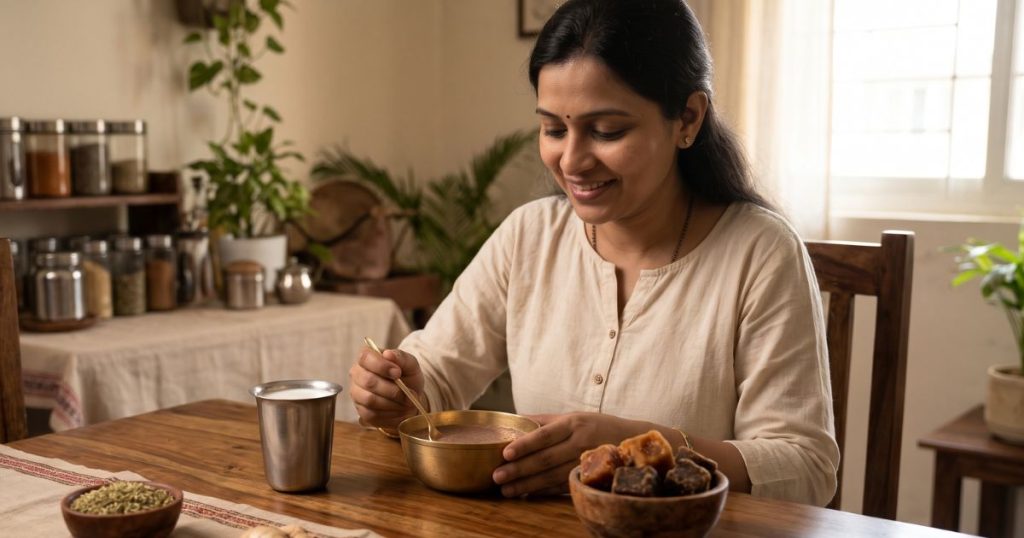
- Iron-Rich Ragi Malt: Cook ragi flour in water or milk until thick, take it off the heat, and stir in a spoonful of jaggery powder for a nourishing breakfast bowl.
When Should You Avoid Jaggery During Pregnancy?
Please consult your healthcare provider or gynecologist before consuming jaggery if:
- You have been diagnosed with Gestational Diabetes Mellitus (GDM) or impaired glucose tolerance.
- You are experiencing rapid gestational weight gain beyond clinical recommendations.
- You are managing active yeast infections (high dietary sugars can worsen candida overgrowth).
Nourish Your Pregnancy with Real, Honest Sweetness
Replacing refined white sugar with pure, unrefined jaggery is a wholesome step for your family’s daily wellness. By choosing traditionally crafted gur made without chemical bleaches, you ensure that every sweet bite provides real, untampered nourishment.
Frequently Asked Questions
Can I eat jaggery in the first trimester of pregnancy?
Yes, you can eat jaggery in the first trimester in small, controlled amounts (around 5 to 10 grams daily). Natural jaggery does not cause pregnancy complications when consumed in normal culinary portions. Avoid taking concentrated home remedies that combine excess gur with strong heating spices without medical supervision.
Does eating jaggery during pregnancy cause a miscarriage?
No, eating normal culinary amounts of pure jaggery does not cause a miscarriage. This belief comes from traditional home practices where large quantities of old jaggery were mixed with strong herbs to stimulate menstrual flow. A standard 5g to 10g cube of pure, chemical-free jaggery eaten with meals is safe for a healthy pregnancy.
How much jaggery can a pregnant woman eat per day?
Most nutritionists recommend limiting jaggery intake to approximately 10 to 15 grams per day (about 1 to 2 small cubes or 1 level tablespoon of powder). This portion lets you enjoy natural sweetness and trace minerals without adding excess calories or destabilizing blood sugar levels.
Can I eat jaggery if I have gestational diabetes?
No, if you have been diagnosed with gestational diabetes mellitus (GDM), you should avoid jaggery unless specifically cleared by your doctor. Although jaggery is unrefined, it consists primarily of sucrose and fructose, meaning it will raise your blood sugar levels just like other sugars.
Why should pregnant women avoid bright yellow jaggery?
Bright yellow or pale golden market jaggery is almost always treated with chemical bleaches like sodium hydrosulphite (hydros) or synthetic food dyes. Ingesting chemical clarifying residues during pregnancy exposes your body to unwanted synthetic compounds. Expectant mothers should always choose naturally dark, amber-brown, unbleached jaggery.
Does jaggery help cure pregnancy anemia?
Jaggery contains dietary non-heme iron and can support your daily mineral intake, but it does not cure clinical pregnancy anemia on its own. Non-heme plant iron has lower absorption rates than animal-based iron. It should be used as a wholesome dietary food, never as a replacement for iron and folic acid supplements prescribed by your gynecologist.