To identify pure jaggery, check its color, taste, and water solubility. Pure, chemical-free jaggery is naturally dark brown to deep amber, has a balanced caramel sweetness without salty or bitter notes, and dissolves completely in water without leaving chalky white sediment at the bottom of the glass.
Key Takeaways
- Color indicator: Pale golden or bright yellow jaggery usually contains chemical bleaches like sodium hydrosulphite; authentic gur oxidizes naturally into deep brown or dark amber shades.
- Flavor check: Fresh, unadulterated jaggery tastes rich and sweet; a salty or sour bite indicates old sugarcane juice or added mineral salts.
- Water solubility: Authentic jaggery dissolves cleanly in lukewarm water, whereas adulterated samples leave insoluble residues like chalk powder or sand.
- Texture feel: Pure jaggery is firm yet pliable, whereas heavily adulterated blocks feel stony hard or crumble into dry, chalky powder.
Why Is Checking Jaggery Purity So Important?
Most Indian households switch from refined white sugar to jaggery (gur) to choose whole, wholesome nutrition. We use gur in daily chai, winter laddoos, festival sweets, and post-meal digestives for our families.
However, commercially mass-produced jaggery in local wholesale mandis is often treated with chemical clarifiers like sodium hydrosulphite (popularly called “hydros” or “safeda”), synthetic yellow dyes (such as Metanil yellow), or bulking agents like calcium carbonate (chalk powder). Consuming chemically bleached jaggery defeats the primary health purpose of moving away from refined white sugar.
| Feature | Pure Chemical-Free Jaggery | Chemically Bleached / Adulterated Gur |
|---|---|---|
| Visual Appearance | Dark amber, deep brown, or rustic reddish-gold | Bright pale yellow, glowing golden, or whitish |
| Clarification Agent | Plant-based extracts (e.g., wild okra / Sukhalayi) | Sodium hydrosulphite (“hydros”), chemical bleaches |
| Taste Profile | Rich, caramel-like, natural sweetness | Salty aftertaste, flat, or harsh chemical bite |
| Water Solubility | Dissolves completely; clean liquid | Leaves white chalky powder or sand at the bottom |
| Reaction in Milk | Dissolves smoothly when mixed off the flame | Splits or curdles milk rapidly due to added sodas |
| Texture & Cut | Pliable, easy to slice with a kitchen knife | Stony hard (requires a hammer) or overly dry and crumbly |
6 Easy Home Tests to Identify Pure Jaggery
Test 1: The Visual Color and Shine Check
Pure jaggery is naturally dark brown to deep amber, while bright yellow gur is almost always chemically treated.
When raw sugarcane juice is simmered in open pans, natural caramelization and oxidation naturally turn the syrup dark. To produce the bright golden lumps often seen in grocery stores, commercial processors add industrial bleaching agents or artificial dyes.
- How to test: Inspect your jaggery block under daylight.
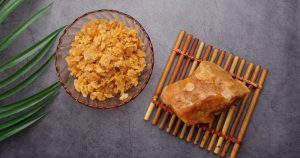
- What to observe: Authentic jaggery has an earthy, matte brown or deep mahogany appearance. If it shines with an unnaturally pale or bright neon-yellow hue, it has likely undergone chemical bleaching.
Test 2: The Water Solubility and Residue Test
Authentic jaggery dissolves completely in water, whereas adulterated gur leaves insoluble white powder or grit behind.
Insoluble bulking agents such as calcium carbonate (chalk powder) or sodium bicarbonate are sometimes mixed into molten gur to increase weight and hardness.
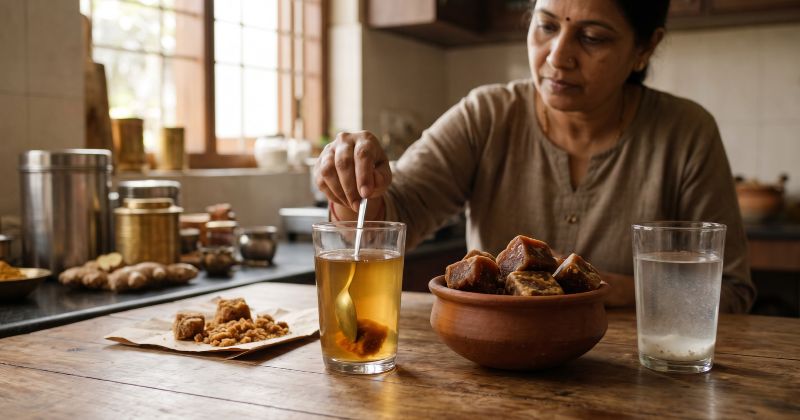
- How to test: Take a transparent glass of warm water. Drop a small piece (around 5–10 grams) of jaggery into it and stir thoroughly for two minutes.
- What to observe: Pure jaggery dissolves entirely, turning the water a clear, translucent golden-brown. If a layer of white powdery chalk or gritty sand settles at the bottom of the glass, the jaggery has been bulked with mineral adulterants.
Test 3: The Tongue Taste Test
Pure jaggery delivers a smooth, earthy sweetness, whereas adulterated or spoiled jaggery leaves a noticeable salty or sour finish.
Sugarcane juice naturally contains trace minerals, but it should never taste distinctly salty.
- How to test: Break off a tiny 2-gram crumb of jaggery and let it dissolve slowly on the tip of your tongue.
- What to observe: If the taste is balanced and rich with warm caramel notes, it is fresh and genuine. A distinct salty note points to added mineral salts or the use of old, fermented cane juice. A bitter bite indicates chemical clarifier residues.
Test 4: The Texture and Knife Cut Test
Chemical-free jaggery retains natural moisture and cuts cleanly, while adulterated blocks are either rock-hard or dry and powdery.
Natural gur contains natural moisture and fructose.
- How to test: Press a cube between your thumb and index finger, or slice through it with a regular kitchen knife.
- What to observe: Real gur yields under firm pressure and cuts smoothly without shattering. If the block requires a heavy tool to break or shatters into dry, dusty powder, it often points to added commercial hardening agents.
Test 5: The Mild Acid (Vinegar) Effervescence Test
Pure jaggery does not react with mild acids, but jaggery mixed with chalk or washing soda will fizz immediately.
This is a reliable chemical test you can conduct safely in your kitchen.
- How to test: Place half a teaspoon of crushed jaggery in a small stainless steel katori. Pour one teaspoon of plain white vinegar or fresh lemon juice over it.
- What to observe: If there is no bubbling, your jaggery is free of alkaline fillers. If you observe tiny gas bubbles, foaming, or effervescence, the acid is reacting with alkaline calcium carbonate or soda.
Test 6: The Warm Milk Test
Pure, unadulterated jaggery blends evenly into warm milk without curdling it.
A common frustration in Indian kitchens is having milk curdle when making gur ki chai or traditional haldi doodh.
- How to test: Warm 50 ml of milk in a pan. Take the pan completely off the stove, let it rest for 30 seconds to settle the boiling heat, and stir in half a teaspoon of jaggery.
- What to observe: Pure jaggery melts smoothly without splitting the milk. If the milk instantly separates into watery whey and clumps, the jaggery contains acidic chemical residues or sodas that disrupt dairy proteins. (Note: Even pure jaggery should never be boiled vigorously alongside milk on a high flame, as extreme direct heat can split dairy proteins).
From our unit: Preserving Purity the Traditional Way
At our Bamel Gruh Udyog processing unit in Dudwara, Narsinghpur (Madhya Pradesh), our cane fields thrive along the fertile Narmada basin. We never use chemical clarifiers like sodium hydrosulphite to artificially brighten our gur.
Instead, our craftsmen follow time-honored open-pan boiling across a traditional four-kadhai setup insulated with fire bricks[cite: 2.2]. We clarify the simmering cane juice using only natural wild okra extract (Sukhalayi / ladyfinger stem mucilage), whose natural plant proteins bind to raw cane fibers so they can be skimmed off by hand[cite: 2.2]. To gently settle foaming bubbles, we use a few drops of pure cold-pressed castor oil (arandi ka tel) rather than commercial synthetic defoamers[cite: 2.2]. Once cooled and cured, our chemical-free jaggery is packed at our shipping hub in Panchkula, Haryana, ensuring clean sweetness for your family.
Proper Storage: Keeping Chemical-Free Jaggery Fresh
Because chemical-free gur contains natural moisture and zero chemical preservatives, it requires simple, thoughtful care in your kitchen pantry:
- Store in airtight containers: Use food-grade glass jars or clean stainless steel dabbas. Avoid storing in thin plastic polythene pouches where moisture can accumulate.
- Always use a dry spoon: Never introduce wet spoons or damp fingers into your jaggery jar. Even a drop of moisture can trigger fungal growth in preservative-free jaggery.
- Refrigerate during humid months: In peak monsoon or hot coastal summers, keep your jaggery cubes or powder in the refrigerator to maintain their firm shape and prevent moisture absorption.
Experience Real, Unadulterated Sweetness
Selecting genuine, unrefined jaggery guarantees that your family enjoys the traditional goodness of sugarcane without hidden industrial bleaches. Whether sweetening morning porridge, brewing evening chai, or making traditional sweets, checking purity ensures a wholesome alternative to white sugar.
Shop Pure 5g Gur Cubes
Shop Jaggery Powder
Try Chatkara Masala Gur
Frequently Asked Questions
Why is pure jaggery dark brown instead of yellow?
Pure jaggery is naturally dark brown because sugarcane juice oxidizes and caramelizes during prolonged open-pan boiling. The bright yellow or pale golden jaggery commonly seen in wholesale markets is usually produced by adding chemical bleaches like sodium hydrosulphite or artificial dyes to lighten the finished product.
Does pure jaggery curdle milk when making tea?
Pure jaggery does not curdle milk if the tea is brewed correctly. To prevent curdling, prepare your black tea decoction with jaggery first, turn off the flame completely, and stir in warm milk at the end. Jaggery that contains sour fermented acids or chemical clarifiers will curdle milk almost instantly.
How do you check if chalk powder is mixed into jaggery?
Dissolve a spoonful of crushed jaggery in a glass of warm water and let it stand undisturbed for two minutes. Pure jaggery dissolves completely without leaving sediment. If chalk powder (calcium carbonate) has been added as a bulking agent, an insoluble white, powdery residue will settle at the bottom of the glass.
Why does some jaggery taste slightly salty?
A salty taste in jaggery indicates either excessive mineral salts from old, over-ripened sugarcane, prolonged storage where the product has begun degrading, or the deliberate addition of sodium salts during processing to increase weight. Genuine, fresh jaggery tastes naturally sweet with deep caramel notes.
Is jaggery powder easier to test for purity than solid blocks?
Both formats follow the same purity principles. However, jaggery powder dissolves much faster in water, making the water solubility test and vinegar effervescence test quicker to conduct at home.