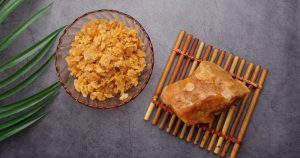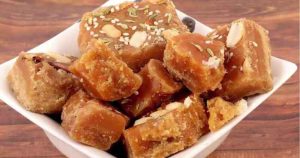
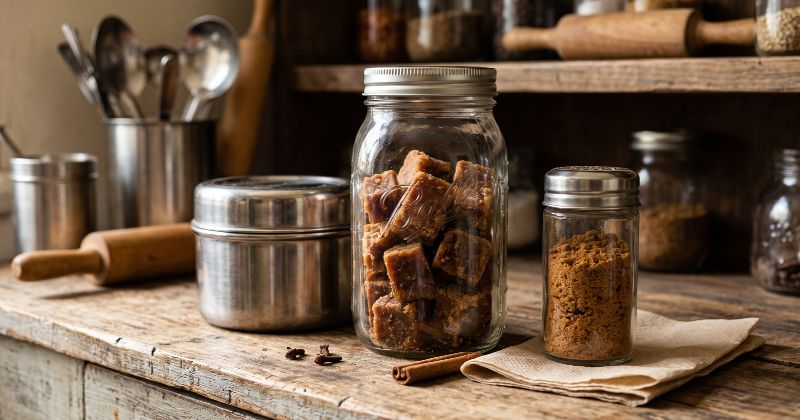
To store jaggery properly, keep it in an airtight glass jar or food-grade stainless steel container in a cool, dark, and completely dry pantry. Pure, chemical-free jaggery attracts ambient moisture quickly, so you must always use a dry spoon, avoid humid air, and refrigerate it during wet monsoon months.
Key Takeaways
- Airtight is non-negotiable: Oxygen and humidity make natural jaggery soft, watery, and sticky. Always seal your jars tightly.
- The dry spoon rule: Even a single drop of water from a wet metal spoon can trigger white mold in chemical-free jaggery.
- Glass or steel over plastic: Store blocks and powder in glass mason jars or traditional stainless steel dabbas; avoid thin polythene bags.
- Monsoon strategy: When seasonal humidity exceeds 60%, shift your jaggery containers to the refrigerator to preserve texture and flavor.
Why Does Pure Jaggery Spoil or Melt So Fast?
Pure jaggery is naturally hygroscopic, meaning it acts like a sponge that pulls moisture directly from the surrounding air.
When you buy authentic, chemical-free gur, it contains active organic cane nutrients, invert sugars (fructose and glucose), and natural moisture. Unlike commercial white sugar or chemically treated jaggery that has been dried out with synthetic clarifiers, natural jaggery breathes.
If left open on a warm kitchen slab near your gas stove or sink, the jaggery absorbs atmospheric humidity. Within days, the surface turns shiny and sticky, starts weeping brown syrup, and can eventually develop white fungal patches. Storing it properly protects both your money and your family’s health.
Best Containers for Storing Jaggery: Which One Wins?
The vessel you pick determines whether your jaggery stays fresh for weeks or lasts across seasons.
| Container Material | Moisture Protection | Shelf-Life Impact | Our Verdict |
|---|---|---|---|
| Glass Jars (Airtight) | Excellent | 6 to 12 Months | Best Choice: Non-reactive, transparent, completely seals out moisture. |
| Stainless Steel Dabbas | Very Good | 6 to 10 Months | Traditional Favorite: Sturdy, light-blocking, hygienic, and easy to clean. |
| Earthen Clay Pots (Matka) | Fair | 2 to 3 Months | Good for cooling in dry winters, but absorbs moisture during rains. |
| Plastic Bags / Pouches | Poor | Under 1 Month | Avoid: Traps internal condensation, causing gur to sweat and darken. |
5 Step-by-Step Rules to Store Jaggery for Months
1. Pick an Airtight Glass or Heavy Stainless Steel Vessel
Store your jaggery in clean glass mason jars or heavy-gauge stainless steel containers with tight-fitting lids. Glass is non-reactive, meaning it will never alter the delicate caramel aroma of the gur. Stainless steel keeps out light, which prevents premature color darkening. Always inspect the rubber gasket on glass jar lids to ensure no humid air seeps inside.
2. Introduce the “Dry Paper Towel” Barrier
Before filling your storage jar, line the bottom with an unbleached kitchen paper towel or a clean muslin cloth. Place your jaggery inside, and lay another folded paper towel on top just beneath the lid. This paper barrier absorbs any residual moisture trapped inside the container every time you open the jar.
3. Enforce the “Zero-Water” Kitchen Rule
The single biggest cause of fungal mold on jaggery is cross-contamination from everyday cooking. Never dip damp fingers, a wet knife, or a freshly washed spoon into your gur jar. Use a designated wooden spoon or dry stainless steel spoon, and keep the jar open for only a few seconds while taking out your daily portion.
4. Divide Into “Daily Use” and “Bulk Reserve” Jars
If you purchase 2 kg or 5 kg of jaggery at a time, never use the main container for your morning tea routine. Opening a large jar twice a day lets in fresh kitchen steam from boiling dal and chai.
- Keep a small 250-gram jar on your dining table or spice shelf for daily use.
- Keep the main bulk container sealed tightly in the coolest, darkest corner of your kitchen cupboard.
5. Chill During Peak Monsoon and Summer
During rainy months (July to September in North and Central India), ambient humidity routinely crosses 70%. When humidity spikes, move your airtight glass container or zip-lock freezer bags into the refrigerator. Cold temperatures put natural enzymatic activity on pause and prevent the gur from melting into syrup.
How to Store Jaggery Powder (Shakkar) Without Lumps
Jaggery powder requires extra care because its fine granules offer more surface area to absorb ambient humidity.
- Avoid plastic shakers near the stove: Never keep your jaggery powder shaker right beside the cooking hob. Rising steam will enter the nozzle and turn the powder into hard, unyielding clumps within three days.
- Break up early moisture: If you notice your powder starting to feel heavy or clumping slightly, tip it out onto a clean cotton cloth or broad thali in a cool, well-ventilated room (away from direct scorching sunlight) for 2 hours, then re-pack into an airtight jar.
- Add natural moisture absorbers: Keeping a few grains of raw, uncooked white rice tied in a tiny muslin pouch inside your shakkar jar works as a natural desiccant without altering the taste.
Season-by-Season Storage Checklist
| Season | Primary Danger | Best Storage Method |
|---|---|---|
| Winter (Nov – Feb) | Low risk; dry and cool climate | Store in cool kitchen cabinets in glass or steel dabbas; no fridge needed. |
| Summer (March – June) | High ambient heat; melting risk | Keep in dark pantry away from sunlight; refrigerate if kitchen crosses 35°C. |
| Monsoon (July – Sept) | Extreme humidity; mold & liquid leakage | Mandatory Refrigeration: Seal in airtight jars inside the fridge crisper. |
Can You Keep Jaggery in the Fridge or Freezer?
Yes, keeping jaggery in the refrigerator or deep freezer is safe and effective for long-term storage, provided you follow one basic rule: manage condensation.
When you pull a cold jar of gur out of the fridge and open it immediately on a hot kitchen slab, moisture droplets form on the cold surface of the jaggery. This surface sweat will spoil the block once you put it back.
The Right Way to Refrigerate:
- Portion your jaggery into small blocks or cubes before chilling.
- Take out only the exact quantity you need for the day and close the main container immediately before condensation forms.
- If freezing for 6 to 12 months, wrap portions in parchment paper and place them inside heavy-duty airtight freezer containers.
From our unit: How We Protect Freshness at Bamel Gruh Udyog
At our Bamel Gruh Udyog processing unit in Dudwara, Narsinghpur (Madhya Pradesh), we make our jaggery along the Narmada basin without adding artificial chemical preservatives or moisture-locking synthetic waxes. We boil the cane juice across a traditional four-kadhai setup insulated with fire bricks and clarify it purely using natural wild okra (Sukhalayi) extracts.
Because genuine jaggery retains its natural invert sugars, we cure our batches in hygienic, temperature-managed resting troughs before molding. To spare our customers the mess of using a hammer on sticky, exposed 5 kg blocks at home, we cast our gur into pre-measured, portion-controlled 5-gram cubes. Once cast, they are sealed in moisture-guarded containers at our packaging hub in Panchkula, Haryana, ensuring they reach your kitchen completely dry and intact.
How to Tell if Stored Jaggery Has Gone Bad
Before using older jaggery that has been sitting in your cupboard, perform these three quick kitchen checks:
- The Smell Test: Fresh jaggery has an earthy, sweet, warm caramel fragrance. If it smells sour, fermented, or resembles vinegar or alcohol, the sugars have fermented due to trapped moisture.
- The Sight Test: A darkening of color from golden amber to deep dark brown is completely natural over time due to slow oxidation. However, if you spot fuzzy white, green, or powdery grayish spots, that is mold. Discard moldy pieces immediately.
- The Texture Test: If the jaggery feels slightly soft or sticky, it is still safe to cook with (you can use it in halwa, kheer, or baking). But if it has turned slimy or produces a bitter, sour liquid, it has degraded.
Simplify Your Kitchen with Pre-Portioned Purity
Storing jaggery becomes simple when you do not have to chisel off chunks from large, exposed blocks. Clean, portion-controlled cubes keep your main supply sealed and untouched by moisture.
Frequently Asked Questions
Why is my stored jaggery turning soft and sticky?
Jaggery turns soft and sticky because it is naturally hygroscopic, meaning it absorbs moisture from the air. When stored in unsealed containers, humid kitchen air causes the surface sugars to break down and melt. To fix this, transfer the jaggery to an airtight glass or steel jar with a dry paper towel placed at the bottom.
Can we keep jaggery in the fridge?
Yes, you can safely store jaggery in the fridge, especially during hot summers and humid monsoons. Keep it inside an airtight glass container or sealed freezer bag so it does not absorb odors or moisture from other refrigerated foods. Take out only what you need to avoid moisture droplets forming on the chilled gur.
How long does pure jaggery last without preservatives?
Pure, chemical-free jaggery easily lasts for 6 to 12 months when stored in a cool, dry, and dark pantry in an airtight container. While its color may naturally darken over time due to harmless oxidation, its sweetness, nutritional minerals, and taste remain intact.
Can we eat jaggery if it turns dark brown or blackish?
Yes, it is completely normal and safe to eat jaggery that has turned darker over time. As jaggery ages, natural iron and minerals react slowly with ambient oxygen, causing the shade to deepen. As long as there is no sour smell, fermented taste, or fuzzy mold, dark aged jaggery is safe to consume.
How do you keep ants away from jaggery dabbas naturally?
To keep ants away from your jaggery dabba, place 3 to 4 whole cloves (laung) or a small stick of cinnamon near the rim or around the base of the container. Ants strongly dislike the aroma of cloves and essential oils. Always ensure the container threads and lid are wiped completely clean of sticky syrup drips.
What should I do if white fungus appears on jaggery?
If white powdery or fuzzy fungal mold appears on jaggery, it means moisture entered the container. It is best to discard the affected portions because fungal roots can spread inside porous gur blocks. Prevent this in the future by using dry utensils, sealing lids tightly, and refrigerating during humid months.